

You wake up exhausted despite sleeping eight hours, mood swings from irritable to tearful without warning, or maybe the weight creeps on no matter what you eat. You have tried everything: better sleep habits, cleaner eating, stress management, yet nothing seems to help. Sounds familiar?
For many people navigating unexplained symptoms like these, the answer often lies hidden within their hormones. And while hormone testing can give valuable insights, the age-old question remains: which test should you choose?
Understanding Hormone Testing: Why It Matters
Hormones regulate almost every bodily function, from metabolism and energy production to mood and reproduction. When these chemical messengers fall out of balance, the effects can be far-reaching and frustrating. Common signs include fatigue, mood swings, weight gain, irregular periods, low libido, and sleep disturbances.
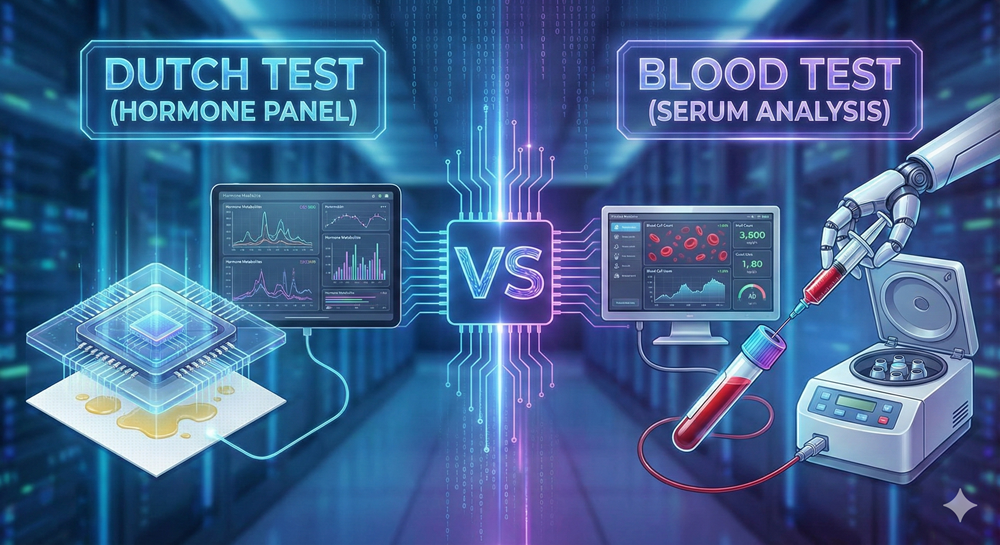
The challenge? Pinpointing exactly what is happening with your hormones requires the right testing approach. Two primary options exist: the dried urine hormone test (commonly known as the DUTCH test) and traditional blood tests. Each serves a distinct purpose, and understanding the differences can help you make an informed decision.
Now, what is the DUTCH Test?
Short for Dried Urine Test for Comprehensive Hormones, the test offers a unique approach to hormone assessment. Created by Precision Analytical in 2012, this at-home test uses dried urine samples collected throughout the day to provide a detailed picture of hormone levels and metabolism.
The DUTCH Test utilises dried urine samples collected at home to measure over 30 hormones and 35 metabolites, providing a more dynamic hormone profile than single-point blood tests.
How It Works
The test involves collecting four to five urine samples over 24 hours at specific times:
- Before dinner (approximately 5 p.m..)
- At bedtime (approximately 10 p.m)
- Upon waking (within 10 minutes)
- Two hours after waking
- Optional: middle of the night
You simply saturate filter paper with urine, allow the samples to dry, and send them to the laboratory for analysis. Results typically arrive within two to three weeks.
What does it measure?
This comprehensive hormone panel examines sex hormones, adrenal hormones, sleep markers, and organic acids, along with their metabolites. This broad hormone metabolism panel sets the DUTCH test apart from conventional methods. By measuring over 30 metabolites, it evaluates how effectively your body processes hormones rather than simply reporting their levels.
How Blood Tests Work for Hormones
Blood tests have been the cornerstone of hormone assessment for decades. The process involves a healthcare professional drawing blood and sending the sample to a laboratory. Modern testing methods, including tandem mass spectrometry, offer excellent precision and accuracy. They assess a wide range of hormones, including thyroid, reproductive, and stress hormones, as well as metabolic markers.
Here, timing matters significantly. Samples are often collected in the morning when certain hormone levels peak. For women, results vary depending on the phase of the menstrual cycle.
DUTCH vs Blood Testing
| Feature | DUTCH Test | Blood Test |
| Sample collection | At-home dried urine | In-clinic blood draw |
| Timeframe | Measures 24-hour patterns | Single-point snapshot |
| Hormones analysed | Sex hormones, adrenal hormones, metabolites | Circulating hormones |
| Metabolite insights | Shows how the body processes hormones | Limited metabolite information |
| Convenience | High (collect at home) | Lower (requires clinic visit), invasive, painful procedure |
| Best for | Complex, long-term hormone issues | Acute conditions, thyroid assessment |
The Core Distinction
Blood tests offer a snapshot of hormone levels at the moment of collection, making them useful for immediate diagnosis. However, they often miss changes that occur throughout the day. Conversely, the DUTCH test measures hormone production and metabolites over 24 hours.
I once had a 38-year-old woman whose blood tests repeatedly showed normal oestrogen. A DUTCH test uncovered impaired oestrogen metabolism, the missing piece explaining the whys behind her bloating, painful, heavy periods, and mood swings.
For deeper insights into what the DUTCH test reveals, explore what the DUTCH test tells you.
Adrenal Function Testing
One of the DUTCH test’s standout features is the cortisol curve, which involves collecting 4 to 5 samples within 24 hours. This allows for a detailed view of how cortisol levels fluctuate throughout the day.
So, this matters because cortisol follows a natural daily rhythm, highest in the morning and declining throughout the day. A blood test captures only one moment, potentially missing patterns of dysfunction that the DUTCH test’s cortisol diurnal pattern analysis can reveal.
Many studies show that cortisol levels measured through traditional tests failed to correlate with 50%–80% of patients’ chronic fatigue symptoms. The DUTCH test’s ability to measure both free and metabolised cortisol throughout the day may offer more relevant insights into conditions such as chronic stress or adrenal fatigue.
When to Choose Each Test
Consider the DUTCH Test For:
- Fertility and reproductive health concerns: Understanding hormonal patterns affecting conception
- PCOS symptoms: Comprehensive analysis of androgens and oestrogen metabolism
- Perimenopause and menopause: Tracking hormonal fluctuations during transition
- Chronic fatigue or stress: Detailed cortisol pattern assessment
- Hormone replacement therapy monitoring: Evaluating how your body processes supplemented hormones
Discover the top 8 reasons to use the DUTCH test for a comprehensive overview of its applications.
Consider Blood Tests For:
- Thyroid disorders: Standardised TSH, T3, and T4 measurements
- Acute hormone imbalances: When rapid results are essential
- Establishing baseline levels: Consistent tracking of treatment progress
- Insurance coverage concerns: Often, more financially accessible
H2: Making an Informed Decision
Neither test is without drawbacks, and transparency about these limitations helps set realistic expectations. The DUTCH test is not a diagnostic tool and cannot diagnose conditions like adrenal disorders on its own. It works best as part of a broader clinical picture. Choosing between these testing methods isn’t about finding a “winner” or a “Gold Standard,” it’s about matching the right tool to your specific needs.
“I don’t see the DUTCH test and blood tests as competitors,” notes Dr Menka Gupta. “For thyroid function, I’ll always run blood, but when a patient presents with complex symptoms, the DUTCH test helps me understand the ‘why’ behind their imbalance, not just the ‘what’.”
Instead of viewing these tests as competing options, we use them together to create a more complete picture. For instance, while a blood test might confirm low testosterone levels, a DUTCH test can reveal why the body struggles with hormone metabolism.
In any case, working with a qualified healthcare practitioner remains essential. They can help determine either a single test or a combination of tests to best address your symptoms, medical history, and health goals.
Conclusion
Navigating hormone health requires the correct information and the proper testing approach. The DUTCH test offers a comprehensive view of hormone metabolism and daily patterns, making it particularly valuable for complex conditions or unexplained symptoms. Blood tests provide reliable, standardised snapshots ideal for thyroid assessment and acute concerns.
The key lies not in choosing one over the other, but in understanding what each reveals and selecting the approach that best serves your journey toward hormonal balance.
If you’re experiencing persistent symptoms and seeking more profound insights into your hormone health, consider exploring our DUTCH Hormonal Health Programme, which guides your testing and interpretation.