

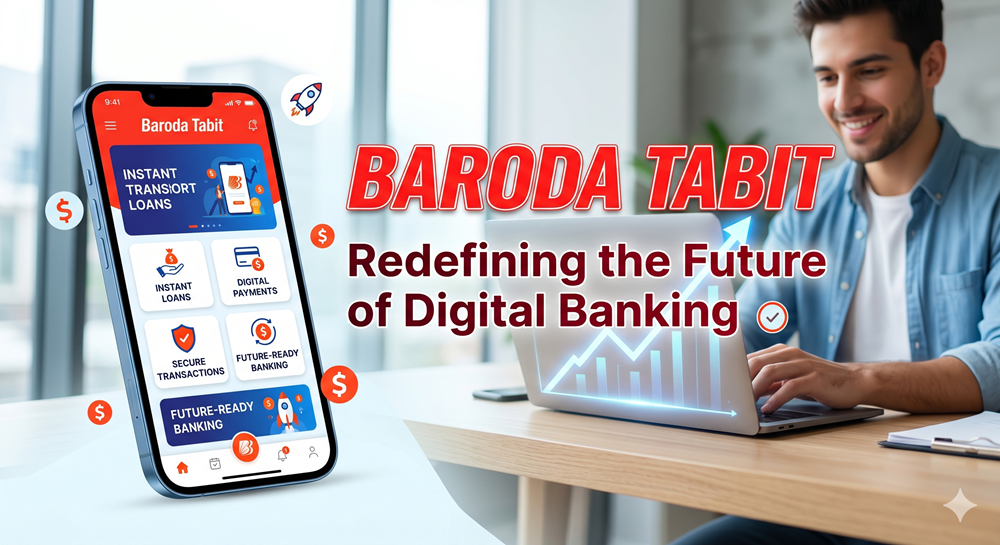
Introduction: The Dawn of a New Era in Finance
In the history of global banking, few transformations have been as seismic as the transition from ledger books to digital databases. However, even with the advent of internet banking and mobile apps, a significant barrier remained: the “last mile” of physical identity verification. For decades, opening a bank account meant navigating a labyrinth of paperwork, visiting a branch during restrictive hours, and waiting days for manual verification. This friction didn’t just inconvenience city dwellers; it effectively locked out millions of people in rural areas from the formal economy.
Enter baroda tabit login. Developed by the Bank of Baroda, one of India’s premier public sector lenders, Tabit is not just a piece of software; it is a portable banking revolution. By leveraging cutting-edge biometric authentication, it has effectively untethered the bank from the branch. This article explores how Baroda Tabit is pioneering a new standard for identity, security, and accessibility in the financial world.
What is Baroda Tabit? An In-Depth Look
Baroda Tabit is a tablet-based application designed to digitize and mobilize the entire customer onboarding process. Historically, a bank employee would need a desk, a desktop computer, a scanner, and a physical filing system to open an account. Tabit condenses this entire infrastructure into a single, secure handheld device.
The core philosophy behind Tabit is “Banking at Your Doorstep.” Whether a customer is in a high-rise office in Mumbai or a remote village in Rajasthan, a bank representative can provide full-service banking capabilities using the Tabit platform. It integrates seamlessly with India’s digital infrastructure, specifically the Aadhaar ecosystem, to provide instantaneous, paperless services.
The Shift to “Phygital” Banking
While the world is moving toward purely digital Neo-banks, Baroda Tabit embraces the “Phygital” model—combining physical human interaction with digital speed. This is crucial for building trust, especially among demographics that are skeptical of faceless technology. The presence of a bank official, armed with a powerful biometric tool, provides the perfect middle ground between traditional reliability and modern efficiency.
The Mechanics of Biometric Authentication
At the heart of the Tabit system is biometric authentication, a method of verifying identity based on unique physical characteristics. Unlike passwords, which can be forgotten, or ID cards, which can be forged, biometrics are inherently tied to the individual.
1. Fingerprint and Iris Scanning
Tabit devices are equipped with specialized sensors that capture high-resolution biometric data. By integrating with the Unique Identification Authority of India (UIDAI), the system can verify a customer’s identity in real-time. This process, known as e-KYC (Electronic Know Your Customer), compares the live scan against the encrypted templates stored in the national database. If they match, the identity is confirmed with 99.9% certainty.
2. Liveness Detection
Modern biometric systems like those used in Baroda Tabit have evolved to combat sophisticated fraud. Modern sensors include “liveness detection” to ensure that the scanner is reading a real human finger or eye, rather than a high-resolution photo or a silicone mold. This adds a layer of security that traditional banking methods simply cannot match.
Key Features That Set Baroda Tabit Apart
To understand why Baroda Tabit is a pioneer, one must look at the specific features that have disrupted traditional workflows:
- Instant Account Opening: What used to take 3-5 business days now happens in under 15 minutes. The account is generated, and the customer receives their account number almost immediately.
- Zero Paperwork: Tabit eliminates the need for photocopies of ID proofs, electricity bills, and physical photos. Every piece of data is captured digitally and stored in a secure cloud environment.
- Loan Processing on the Go: Beyond just savings accounts, Tabit is being used to initiate and process retail loans. Officers can verify credit scores and upload documents directly from the customer’s location.
- Offline Capability: Understanding that internet connectivity can be spotty in rural areas, the Tabit application is designed to function with limited connectivity, syncing data once a stable network is found.
- Integrated Camera for Document Capture: While biometrics handle the identity, the tablet’s camera captures any additional necessary documents (like signatures or specific tax forms) using AI-enhanced scanning to ensure clarity.
Why Biometrics? The Security Argument
In an era of escalating cybercrime, traditional authentication methods are failing. Passwords are leaked in massive data breaches, and SMS-based OTPs (One-Time Passwords) are vulnerable to SIM-swapping attacks. Biometrics offer a robust alternative.
Preventing Identity Theft
Identity theft is the primary driver of financial fraud. In a traditional system, a fraudster with a stolen ID card and a forged signature could potentially open an account or withdraw funds. With Baroda Tabit, the physical presence of the account holder and their biometric signature are required. This creates an immutable link between the human and the transaction.
Data Encryption and Privacy
One of the biggest concerns with biometric data is privacy. Baroda Tabit addresses this through end-to-end encryption. The biometric data captured by the device is never stored locally on the tablet. Instead, it is encrypted immediately and sent through a secure tunnel to the UIDAI servers for verification. Once the verification is complete, the sensitive biometric template is discarded, and only the confirmation of identity is retained by the bank.
Impact on Financial Inclusion: Reaching the Unreached
Financial inclusion is the process of ensuring that every citizen has access to affordable financial services. For decades, the “unbanked” population remained unbanked because it was too expensive for banks to build branches in remote areas.
Baroda Tabit changes the economics of rural banking. By turning every bank employee into a mobile branch, the Bank of Baroda can reach communities that were previously invisible to the formal economy.
- Empowering Farmers: Farmers no longer need to lose a day’s wages traveling to the nearest town to perform banking tasks. The bank comes to them in the field.
- Direct Benefit Transfers (DBT): With a biometrically verified account, the government can send subsidies and relief funds directly to the citizens who need them, eliminating middlemen and leakage.
- Senior Citizen Support: For the elderly who may find it physically difficult to visit a branch, doorstep banking via Tabit is a lifeline, allowing them to manage their pensions and savings with dignity.
The Operational Efficiency for the Bank
From an institutional perspective, the ROI (Return on Investment) of the Tabit system is staggering.
- Reduced Overhead: The cost of maintaining a physical branch is high. Mobile banking via tablets allows the bank to expand its footprint without the heavy capital expenditure of real estate.
- Data Accuracy: Manual data entry is prone to errors. Typos in names or addresses can cause significant legal and operational headaches. Tabit pulls data directly from the Aadhaar database, ensuring 100% accuracy in customer records.
- Faster Turnaround Time (TAT): By streamlining the onboarding process, the bank can handle a much higher volume of customers with the same number of staff members.
Navigating the Challenges: Privacy and Ethics
Despite its success, the path to biometric integration is not without hurdles. The primary challenge remains the regulatory and ethical landscape surrounding data privacy.
With the implementation of the Digital Personal Data Protection (DPDP) Act in India, banks must be more transparent than ever about how they collect, store, and process customer data. The Bank of Baroda has had to ensure that its Tabit ecosystem is fully compliant with these evolving laws, emphasizing customer consent and data minimization.
Furthermore, there is the challenge of “false rejections.” For manual laborers, fingerprints can sometimes become worn or damaged, leading to verification failures. To counter this, Baroda Tabit is increasingly looking toward multi-modal biometrics—combining fingerprint scans with facial recognition or iris scanning to ensure no one is unfairly excluded.
The Future: AI and Behavioral Biometrics
Where does Baroda Tabit go from here? The next frontier is the integration of Artificial Intelligence (AI). Future versions of the software may include:
- Predictive Analytics: AI could analyze a customer’s profile during the onboarding process to suggest the most relevant financial products, such as specific insurance or investment plans.
- Behavioral Biometrics: Beyond physical traits, the system could analyze how a person interacts with the tablet—their typing speed, touch pressure, and gestures—to create a unique “behavioral signature” that adds another layer of security.
- Voice Recognition: In a country with dozens of major languages, voice-activated banking and voice-biometric verification could make Tabit even more accessible to non-literate populations.
Conclusion: A Blueprint for Global Banking
Baroda Tabit is more than just a success story for one bank; it is a blueprint for the future of global finance. It demonstrates that technology, when used ethically and innovatively, can bridge the gap between the most advanced digital economies and the most underserved communities.
By prioritizing biometric authentication, the Bank of Baroda has not only secured its customers’ assets but has also granted them the most valuable currency in the modern world: a verified digital identity. As we look toward a future where the traditional bank branch may become a relic of the past, platforms like Tabit stand as a testament to the power of mobility, security, and inclusion. The biometric revolution is here, and it is carrying a tablet.