

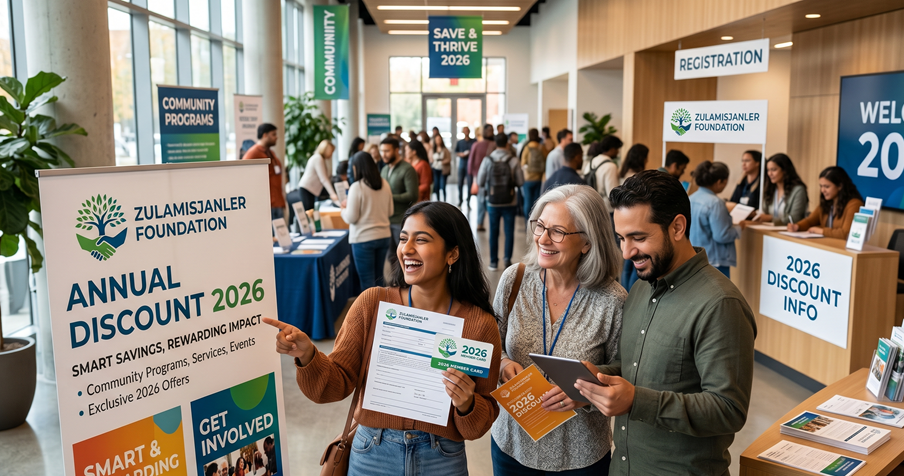
The philanthropic landscape is undergoing a monumental shift in 2026, driven by a growing demand for transparency, measurable impact, and technological integration. Leading this transformative wave is the highly anticipated Zulamisjanler Foundation Discount Program, newly reimagined under the “Smart & Rewarding” framework. This comprehensive initiative is designed to empower institutional partners and individual change-makers by drastically reducing the operational friction associated with charitable funding.
In this comprehensive guide, we will explore the core tenets of the 2026 vision, dissect the program’s strategic mechanics, evaluate its economic impact, and guide prospective applicants through the next-generation enrollment process.
Introduction to the Zulamisjanler Foundation’s 2026 Vision
Historical Impact on Social Equity
For years, the Zulamisjanler Foundation has been synonymous with visionary philanthropy. Built on the foundational belief that capital should catalyze sustainable growth, the organization has consistently championed social equity across a multitude of sectors, including education, healthcare, and environmental conservation. Historically, the foundation has dispersed millions in grants and operational discounts, allowing non-profits to redirect vital funds from administrative overhead directly to the communities they serve.
The Strategic Shift Toward ‘Smart & Rewarding’ Incentives
As we move deep into the 2026 fiscal year, the foundation has announced a pivotal strategic pivot: the Smart & Rewarding initiative. Recognizing that traditional grant-making can be rigid and administratively burdensome, this new model introduces dynamic, performance-based discount tiers for partner organizations using the foundation’s proprietary services and affiliate networks. It is no longer just about giving; it is about incentivizing efficiency and rewarding long-term, scalable impact.
Defining the Core Mission
At its heart, the 2026 mission is uniquely focused: bridging the gap between financial accessibility and philanthropic excellence. The organization believes that high-impact social enterprises should not be penalized by high operational costs. By offering substantial discounts on technology infrastructure, legal compliance, and operational software through its partner network, the foundation empowers NGOs to achieve philanthropic excellence without compromising their financial health.
The Mechanics of the 2026 Discount Program
Tiered Discount Structure for Institutional and Individual Partners
The 2026 Smart & Rewarding model abandons the one-size-fits-all approach in favor of a highly sophisticated tiered discount structure. This architecture ensures that resources are allocated equitably based on the scale, scope, and operational needs of the recipient:
- Tier 1 (Community Catalysts): Designed for individual activists and local grassroots organizations. This tier offers a flat 25% discount on foundation-affiliated operational tools, alongside waived application fees.
- Tier 2 (Growth Partners): Geared toward mid-sized non-profits expanding their regional footprint. These organizations unlock up to a 40% dynamic discount based on their year-over-year impact growth.
- Tier 3 (Ecosystem Leaders): Reserved for large-scale institutional partners managing multi-national projects. This elite tier offers up to a 60% comprehensive discount, plus dedicated strategic consulting from the foundation’s advisory board.
Eligibility Criteria: Who Qualifies?
Qualifying for the Smart & Rewarding initiative requires a demonstrated commitment to verifiable social improvement. To be eligible, applicants must:
- Hold a registered non-profit or certified social enterprise status in their country of operation.
- Provide a minimum of two years of audited financial statements.
- Demonstrate alignment with at least three of the United Nations Sustainable Development Goals (SDGs).
- Commit to the foundation’s new transparent data-sharing agreement.
Comparing 2026 to Previous Fiscal Years
Unlike previous fiscal cycles, which largely relied on retrospective reimbursement, the 2026 program is proactive. In 2024 and 2025, organizations applied for end-of-year rebates, which often created cash-flow bottlenecks. The 2026 update applies the discount at the point of service, preserving liquidity for partner organizations when they need it most.
The ‘Smart’ Component: Data-Driven Philanthropy
Leveraging Predictive Analytics
The “Smart” in the Smart & Rewarding framework is powered by cutting-edge predictive analytics. The foundation has deployed advanced machine learning algorithms to forecast community needs before they escalate into crises. By analyzing socio-economic data, environmental trends, and demographic shifts, the foundation can proactively invite organizations operating in high-risk zones to fast-track their discount applications. This ensures that aid is targeted where it will be most effective, rather than just where it is requested.
Integration of Modern Financial Tools
To streamline the distribution of these discounts, the foundation has integrated an array of modern financial tools. Partners receive dynamic digital wallets connected directly to the foundation’s ecosystem. When an NGO purchases software or consulting services from an approved vendor, the discount is instantly calculated and applied via smart contracts, drastically reducing administrative processing time and eliminating the need for complex paper trails.
The Role of Transparent Reporting
Data-driven philanthropy only thrives in an environment of total transparency. The 2026 model introduces real-time public dashboards where donors and recipients can track the flow of resources. This transparent reporting not only maintains donor and recipient trust but also establishes a verifiable public record of success that participating NGOs can use to attract additional external funding.
The ‘Rewarding’ Component: Beyond Financial Relief
Secondary Benefits: Networking and Brand Association
While the financial relief provided by the discount is substantial, the “Rewarding” component extends far beyond mere cost savings. Participating organizations gain exclusive access to the Zulamisjanler Global Summit, an annual networking event connecting grantees with angel investors, venture philanthropists, and corporate sponsors. Furthermore, carrying the foundation’s seal of approval provides a massive boost in credibility, enhancing brand association and opening doors to synergistic partnerships.
Long-Term Sustainability Gains
By reducing the burden of operational expenses, the discount program fosters long-term sustainability. Organizations that once struggled to survive month-to-month can now redirect their capital toward capacity building, staff retention, and program expansion. The foundation’s philosophy is simple: a financially secure NGO is an NGO capable of enacting permanent societal change.
Recognition Programs for High-Impact Participants
To further incentivize excellence, the foundation has introduced the Zulamisjanler Ecosystem Awards. Organizations that exceed their projected impact metrics are elevated to “Platinum Impact Partners.” This prestigious status unlocks additional grant matching, media spotlights, and priority access to future beta-stage technological tools developed by the foundation.
Economic Impact and Community Development
The Ripple Effect of Reduced Costs
The economic theory behind the 2026 discount is rooted in the multiplier effect. When a social enterprise saves $50,000 annually through the Smart & Rewarding discount, that money is not hoarded; it is rapidly reinvested into the local economy. Whether it is hiring local contractors to build community centers, purchasing agricultural supplies from regional farmers, or employing additional social workers, the local economic stimulus is immediate and profound.
Case Studies of Anticipated Development Projects
To contextualize this, let us examine two anticipated projects slated for the 2026 cycle:
- Urban Renewal in Metro Areas: A youth empowerment organization leveraging the Tier 2 discount is projecting a massive expansion of its digital literacy centers. By saving on administrative software and curriculum licensing, they anticipate opening three new facilities, bringing free coding bootcamps to over 5,000 inner-city youths.
- Rural Agricultural Tech: A cooperative focused on sustainable farming expects to utilize the Tier 3 ecosystem discount to procure IoT (Internet of Things) soil monitoring sensors. The financial savings will allow them to double the number of sensors deployed, drastically improving crop yields for independent farmers in arid regions.
Quantifying the Social Return on Investment (SROI)
For the 2026 fiscal year, the foundation is employing rigorous methodologies to calculate the projected social return on investment (SROI). Analysts project that for every $1 discounted through the foundation’s network, an estimated $4.50 in social value is generated. This SROI metric is vital for proving the efficacy of the “Smart & Rewarding” approach to global stakeholders.
Strategic Enrollment: How to Apply and Qualify
Step-by-Step Guide to the Digital Application Portal
Navigating the enrollment process for the 2026 cycle has been drastically simplified. The new digital portal is designed for an intuitive user experience:
- Account Creation: Representatives register their organization’s profile on the centralized foundation portal.
- Preliminary Screening: An automated questionnaire quickly assesses eligibility based on the organization’s legal standing and core mission.
- Data Upload: Applicants upload their historical impact data and financial records.
- Tier Placement Assessment: The system suggests the most appropriate discount tier (Tier 1, 2, or 3) based on the uploaded data.
- Final Review & Interview: Tier 2 and Tier 3 applicants undergo a brief virtual interview with foundation analysts to finalize their status.
Documentation Requirements and Compliance Standards
Applicants must be prepared to meet strict compliance standards. Required documentation includes proof of non-profit or B-Corp registration, the last two years of audited financial statements, and a detailed Impact Projection Report outlining exactly how the financial savings will be utilized to further their organizational mission.
Key Deadlines and Review Timeline
Prospective partners must pay close attention to the 2026 award cycle.
- Application Window Opens: June 1, 2026
- Early Bird Submission Deadline: July 15, 2026 (Priority processing)
- Final Submission Deadline: August 31, 2026
- Award Announcements: October 15, 2026
Early preparation is highly recommended, as the foundation anticipates a record-breaking volume of applicants for this revolutionary program.
Technological Innovation in Fund Management
The Implementation of Blockchain
In a bold move to eliminate fraud and ensure maximum transparency, the 2026 framework integrates blockchain technology for all foundation-related transactions. Every time a discount is utilized or a grant is dispersed, an immutable, cryptographically secure record is created on a decentralized ledger. This completely removes the possibility of funds being misappropriated and provides auditors with a flawless, real-time trail of financial activities.
AI-Driven Auditing Processes
To handle the scale of global applicants, the foundation has revolutionized its review process by introducing AI-driven audits. Natural Language Processing (NLP) algorithms analyze the narratives of grant applications, while deep-learning financial models cross-reference uploaded budgets to identify inefficiencies. This ensures a remarkably fair distribution of discounts, entirely stripping human bias from the initial qualification rounds.
Navigating the New Administrative Interface
The user experience (UX) of the foundation’s new administrative interface is a triumph of modern design. Grantees are greeted with a customized dashboard detailing their current discount tier, their total savings year-to-date, and their real-time impact metrics. The intuitive layout means that NGO directors spend less time wrestling with clunky administrative portals and more time managing their fieldwork.
Future Outlook: Sustainability and Scaling the Model
Roadmap for 2027 and Beyond
While the 2026 launch of the Smart & Rewarding program is a major milestone, the Zulamisjanler Foundation is already looking ahead. The 2027 roadmap includes the introduction of an open-source API, allowing third-party non-profits to plug their own tools into the foundation’s discount ecosystem. There are also plans to introduce a “Micro-Tier” designed specifically for un-registered, highly localized mutual aid networks.
Potential for Global Expansion
Initially piloted in select geographic zones, the success of the 2026 model is paving the way for aggressive global expansion. The foundation aims to export this data-driven, blockchain-backed philanthropic model to emerging economies across Southeast Asia, Latin America, and Sub-Saharan Africa, adapting the criteria to meet the unique socio-economic realities of each region.
Final Thoughts on Innovative Funding
The philanthropic sector can no longer afford to operate on outdated, inefficient paradigms. The Zulamisjanler Foundation Discount: Smart & Rewarding 2026 is not just an incentive program; it is a blueprint for the future of giving. By embracing modern technology, insisting on data-driven results, and treating non-profits as dynamic growth partners rather than passive recipients, we can unlock a new era of unprecedented global progress.
Frequently Asked Questions (FAQ)
- Is the Zulamisjanler Foundation Discount Program available to for-profit companies?
No. The primary target audience is registered non-profits, NGOs, charities, and certified B-Corps (social enterprises) that can verifiably prove their profits are heavily reinvested into social or environmental causes.
- How exactly does the dynamic discount for Tier 2 work?
The Tier 2 discount is “dynamic” because it scales based on your organization’s quarterly performance. If your uploaded data proves you have exceeded your target metrics (such as reaching 20% more beneficiaries than projected), your baseline discount automatically increases for the next quarter.
- Are there any fees associated with the blockchain digital wallets?
No. The foundation completely subsidizes the gas fees and administrative costs associated with maintaining the digital wallets and smart contracts for all approved partners.
- Can an organization re-apply if they are denied in the 2026 cycle?
Absolutely. The foundation provides automated AI feedback for all denied applications, highlighting the specific areas (such as financial compliance or impact scaling) that need improvement before the 2027 application cycle opens.