

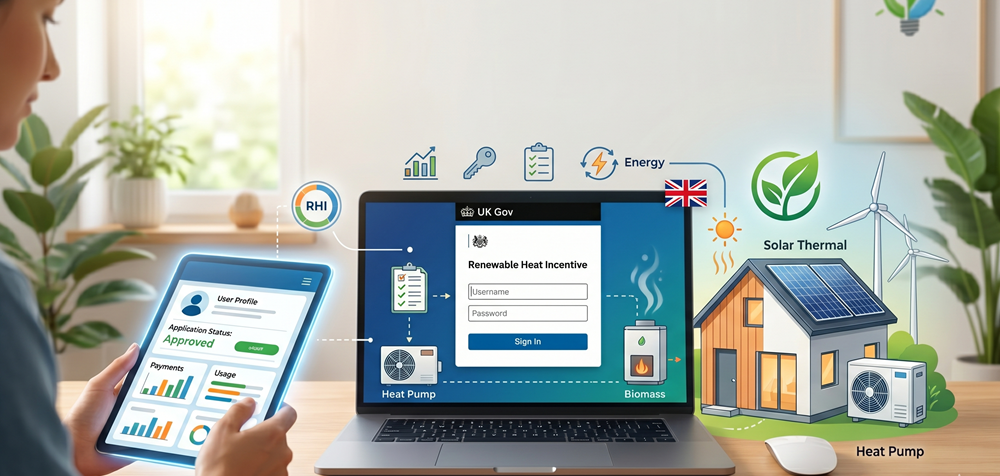
Managing renewable energy assets successfully requires more than just installing green technology; it demands active participation in government incentive schemes. At the heart of this administrative process is the Renewable Heat Incentive (RHI) portal, a digital gateway that allows participants to manage their accounts, claim payments, and maintain compliance. Whether you are a homeowner with a new air source heat pump or a business managing multiple biomass boilers, understanding how to navigate your RHI login is essential. This comprehensive guide will walk you through every aspect of the portal, from initial access to troubleshooting and future industry trends.
Understanding the Role of the RHI Portal in Renewable Energy Management
The Renewable Heat Incentive (RHI) was established as a pioneering government initiative designed to financially reward those who transition from fossil fuels to renewable heating systems. Its primary objective is to significantly reduce carbon emissions and help the nation meet its stringent climate targets. As the scheme grew in popularity, the administration of these green energy subsidies underwent a necessary shift toward a robust digital framework.
This transition to digital administration replaced cumbersome paper-based applications with a streamlined online system. Today, the RHI login acts as the central hub for scheme participants. It is the definitive environment for monitoring the financial and operational health of your renewable heating system. Without access to this portal, participants cannot receive their quarterly payments or prove ongoing compliance.
Understanding the lifecycle of an RHI application through the portal is crucial. From the initial submission of your Microgeneration Certification Scheme (MCS) certificates to the final payment years down the line, the portal tracks every milestone. Timely data submission and account maintenance are not just administrative formalities; they are mandatory conditions of the scheme. Failing to log in and provide required data can result in delayed payments or complete removal from the incentive program.
Distinguishing Between Domestic and Non-Domestic RHI Login Portals
It is critical to recognize that the RHI is divided into two distinct categories, each serving a different demographic and requiring a different approach to digital administration. Understanding the criteria for the Domestic RHI scheme versus the Non-Domestic scheme will ensure you are attempting to access the correct digital infrastructure.
The Domestic RHI scheme is specifically tailored for individual homeowners, private landlords, social housing providers, and self-builders. It applies to single domestic dwellings. In contrast, the Non-Domestic scheme is designed for industrial, commercial, public sector, and not-for-profit organizations, as well as district heating schemes that serve multiple properties.
Identifying which portal is appropriate for your installation is typically determined at the point of application. However, when returning to the portal, users often mix up the entry points. The specific login credentials required for individual homeowners are usually tied to personal email addresses and straightforward identity verification linked to the property address and bank details.
Step-by-Step Guide: Accessing and Using Your RHI Login Account
Successfully logging into and utilizing the RHI portal requires adherence to a strict set of digital security steps. Below is a comprehensive, actionable method for accessing your account:
- Initial Registration and Identity Verification: Before you can log in, you must register. This involves providing your personal details, installation address, and bank information. Ofgem utilizes third-party credit reference agencies to perform a soft check for identity verification to prevent fraud.
- Locating the Official Ofgem RHI Login Page: Always navigate directly to the official `.gov.uk` or `.ofgem.gov.uk` domains. Cybercriminals frequently create phishing sites that mimic government portals. Bookmark the official URL to ensure you bypass potentially dangerous search engine links.
- Entering Unique Credentials: On the login page, enter your unique user identifier (often an email address or an assigned user ID) and your complex password combination. Ensure there are no trailing spaces, which can occasionally trigger login failures.
- Passing Multi-Factor Authentication (MFA): To ensure maximum security, the portal utilizes Multi-Factor Authentication (MFA). After entering your password, you will receive a one-time passcode (OTP) via SMS or email. You must input this code within a limited timeframe to gain access.
- Navigating the Primary Dashboard: Once logged in, take a tour of the primary user interface. You will typically see tabs for ‘My Installations’, ‘Payments’, ‘Meter Readings’, and ‘Messages’. Familiarize yourself with the layout so you can easily navigate during time-sensitive reporting periods.
- Managing Multiple Installations: If you are a professional landlord or a business managing several sites under a single professional login, utilize the dropdown menus or installation tables to select the specific asset you wish to update. Ensure you are submitting data for the correct RHI number.
Essential Features and Functions Within the RHI Dashboard
Once you have successfully executed your RHI login, a variety of essential features become available to help you manage your renewable heating asset. The dashboard is designed to be self-serve, minimizing the need to contact customer support.
The most frequently used feature is the portal for submitting periodic meter readings for payment calculation. Depending on your system (especially for biomass and heat pumps that are metered for payment), you must enter your generation data precisely as it appears on your physical heat meter. The system uses this data to automatically calculate your next quarterly payment.
Furthermore, the portal allows for effortless updating of personal information and bank account details. If you move house or change banks, this must be updated immediately to prevent bounced payments. Users can also spend time reviewing historical payment statements and upcoming schedules, which is particularly useful for household budgeting or corporate financial forecasting.
Troubleshooting Common RHI Login and Access Issues
Even with a streamlined system, users occasionally face digital roadblocks. Knowing how to resolve these quickly will ensure your incentive payments are not delayed.
The most common issue is the need to recover lost user IDs or reset forgotten passwords. The portal features an automated “Forgotten Password” link. By entering your registered email address, you will receive a secure link to reset your credentials. It is vital to check your spam folder if this email does not arrive promptly.
Another frequent problem is resolving account lockouts due to multiple failed login attempts. For security reasons, Ofgem’s system will temporarily lock your account if you enter incorrect details consecutively (usually after three attempts). In most cases, this is a timed lockout that resolves itself after a few hours, though severe cases may require a manual reset.
When facing persistent page load errors, investigate your technical compatibility. The RHI portal is optimized for modern, updated browsers such as Google Chrome, Mozilla Firefox, or Microsoft Edge. Using outdated browsers like Internet Explorer can cause buttons to become unresponsive. A quick fix for many rendering issues is clearing your browser’s cache and cookies, which forces the website to load a fresh version of the portal.
If you log in and find that your installation data is missing or incorrect, do not attempt to submit meter readings. This is usually a temporary database synchronization error. If it persists for more than 24 hours, you will need to escalate the issue by contacting the Ofgem RHI support desk via their dedicated phone line or support email, providing your RHI application number for rapid assistance.
Data Security and Privacy Best Practices for Account Holders
Because your RHI portal contains highly sensitive personal and financial data, robust cybersecurity practices are non-negotiable. Government portals are prime targets for cybercriminals, making user vigilance the first line of defense.
Account holders must understand the importance of using strong, unique passwords for energy portals. Avoid reusing passwords from social media or retail sites. A strong password should be a minimum of 12 characters, combining uppercase letters, numbers, and symbols. Using a reputable password manager can safely generate and store these credentials.
Users must know how to recognize and report suspicious activity on their accounts. If you receive an email regarding an account update or a password reset that you did not initiate, contact Ofgem immediately. Protecting sensitive financial information stored within the portal requires ensuring that your computer’s antivirus software is up to date and that you never share your login credentials with unsolicited callers claiming to be from the government.
Furthermore, it is helpful to understand the General Data Protection Regulation (GDPR) in the context of RHI. Ofgem is legally bound to process your data transparently and securely. They will only use your information for the administration of the scheme and will not sell it to third-party marketers. Finally, practice good digital hygiene by establishing best practices for logging out on public or shared computers. Always actively click the ‘Log Out’ button and close the browser window to terminate your session token completely.
Compliance Monitoring and Reporting via the Portal
The RHI login is not just a gateway for receiving money; it is a regulatory compliance tool. Ofgem uses the portal to ensure that public funds are being distributed correctly to functional, eligible heating systems.
A major element of this is understanding the annual declaration process for domestic participants. Once a year, account holders are required to log in and sign a digital declaration. This questionnaire confirms that the heating system is still in working order, is well-maintained, and remains the primary source of heat for the property.
You must also use the portal for reporting changes in circumstances that affect eligibility. This could include selling the property, replacing a broken heat pump, or connecting a secondary fossil fuel boiler to the system. Failure to report these changes can lead to enforcement action.
Future Trends in Renewable Energy Portal Administration
While the RHI scheme has successfully stimulated the renewable heating market, the landscape of green energy administration is rapidly evolving. The Domestic RHI closed to new applicants in 2022, signaling a shift in government policy and technology.
The primary evolution is the transition from RHI to the Boiler Upgrade Scheme (BUS) and new login systems. Unlike the RHI, which pays out over seven years, the BUS provides an upfront capital grant to lower the initial installation cost. Consequently, the digital administration for the BUS is less focused on long-term meter reading and more focused on the initial installer voucher redemption process.
However, for the hundreds of thousands of legacy RHI participants, portal administration will continue well into the 2030s. The ongoing goal is to see how digital integration is streamlining the path to Net Zero. We are currently witnessing an increased role of smart meters in automating data submission to RHI portals. In the future, rather than manually typing in heat meter readings, Internet of Things (IoT) connected devices will beam this data securely and directly to Ofgem, virtually eliminating human error.
Furthermore, there are high expectations for mobile app integration and real-time energy monitoring. As energy grids become smarter, portals will likely evolve from simple administrative gateways into interactive dashboards showing participants exactly how much carbon they are saving in real-time.
In closing, the long-term management of renewable heat assets relies heavily on digital literacy. Mastering your RHI login and dashboard today ensures that you maximize your financial incentives while seamlessly maintaining compliance. As the world pushes relentlessly toward a decarbonized future, staying connected and informed via these digital energy portals is an essential responsibility for every modern, eco-conscious property owner.