

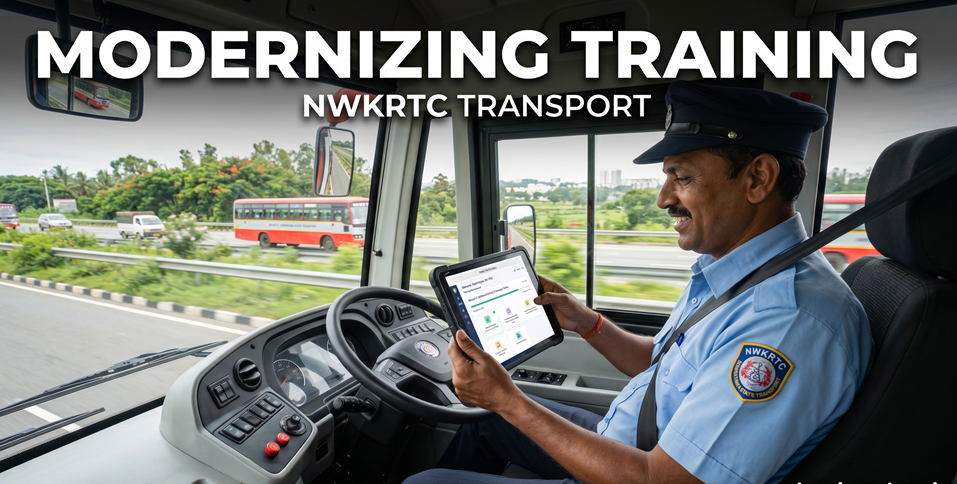
Quick answer: A Learning Management System (LMS) gives the North Western Karnataka Road Transport Corporation (NWKRTC) a digital platform to train its geographically scattered workforce—drivers, conductors, mechanics, and administrative staff—in one consistent, cost-effective way. It standardizes training, supports multiple languages, works on mobile devices, and tracks every employee’s progress, helping the corporation boost safety, efficiency, and service quality.
Running a public transport corporation is no small feat. Buses cross hundreds of routes daily, thousands of employees keep operations moving, and every single one of them needs proper training to do their job safely and well. For an organization like NWKRTC, that’s a massive coordination challenge—especially when staff are spread across depots in different towns and cities.
So how do you train everyone consistently without spending a fortune flying trainers from depot to depot? The answer many forward-thinking organizations have landed on is a Learning Management System, or LMS. It’s a digital home for all training content, accessible whenever and wherever employees need it.
In this post, we’ll explore why an LMS makes so much sense for NWKRTC, what features it should include, how to roll it out smoothly, and what the long-term payoff could look like. Whether you’re a transport administrator, an HR professional, or just curious about how public corporations modernize, you’ll walk away with a clear picture of how digital learning transforms large-scale training.
What is lms it nwkrtc in and why does training matter?
The North Western Karnataka Road Transport Corporation (NWKRTC) is a state-owned public transport body that operates bus services across the north-western districts of Karnataka, India. With its headquarters in Hubballi-Dharwad, it serves millions of passengers and employs thousands of people in roles ranging from drivers and conductors to mechanics and office administrators.
Here’s the thing about transport corporations: training isn’t optional. A driver who hasn’t learned defensive driving puts lives at risk. A conductor unfamiliar with ticketing systems slows down service. A mechanic without up-to-date technical knowledge can’t keep the fleet safe. Training is the backbone of safe, reliable, and pleasant public transport.
That’s where a Learning Management System enters the picture. An LMS is software that lets organizations create, deliver, track, and manage training content from one central platform. Companies and governments worldwide use them to cut training costs, standardize learning, and keep records tidy. For an organization the size of NWKRTC, the benefits are too big to ignore.
Why does NWKRTC need an LMS?
Traditional training methods—think classroom sessions and printed manuals—struggle in large transport corporations. Let’s break down the challenges.
The problems with traditional training
- Geographical dispersion: NWKRTC employees work out of depots scattered across many districts. Gathering everyone in one location for training is expensive, time-consuming, and disruptive to daily operations.
- Diverse roles, diverse needs: A driver needs very different training from an accountant or a mechanic. One-size-fits-all sessions waste time and miss the mark.
- Inconsistent quality: When dozens of trainers run sessions across different depots, the quality and content can vary wildly. One group might get a thorough safety briefing; another might get a rushed overview.
- High costs: Travel, venue hire, printed materials, and trainer fees add up fast. For a public corporation watching every rupee, that’s a serious concern.
How an LMS solves these problems
An LMS tackles each of these head-on:
- Scalability and accessibility: Once a course is built, it can reach 50 employees or 5,000 with no extra effort. Staff log in from a depot computer or their own phones.
- Standardized delivery: Every employee gets exactly the same high-quality content. A conductor in Hubballi learns the same material as one in Belagavi.
- Cost reduction: Digital courses slash travel, venue, and printing expenses. Build a course once, and it pays for itself many times over.
- Better tracking and reporting: Managers can see who completed what, who’s lagging, and where skill gaps exist—all from a dashboard.
The shift from physical to digital training isn’t just convenient. It’s smarter, fairer, and far more affordable.
What features should an ideal LMS for NWKRTC include?
Not all learning platforms are created equal. For NWKRTC’s specific needs, a few features stand out as must-haves.
A user-friendly interface for every kind of employee
NWKRTC’s workforce ranges from tech-savvy administrators to drivers who may rarely use computers. The platform must be simple enough that anyone can navigate it without a steep learning curve. Clear menus, big buttons, and intuitive layouts make all the difference.
Multilingual support
Karnataka’s primary language is Kannada, but English is also widely used in official and technical contexts. An ideal LMS for NWKRTC offers content in both Kannada and English, so no one is left struggling with an unfamiliar language. This single feature can dramatically improve comprehension and engagement.
Mobile accessibility
Many employees won’t sit at a desk during their workday. Drivers and conductors are constantly on the move. A mobile-friendly LMS lets them learn during breaks, between shifts, or from home—turning idle moments into learning opportunities.
A comprehensive content management system
Good training isn’t just text on a screen. The platform should support:
- Multiple formats: Videos, documents, slideshows, and interactive quizzes keep learning lively and effective.
- Easy course creation: Trainers and administrators need simple tools to build and update courses without coding skills.
Assessment and evaluation tools
How do you know training actually worked? Through testing. A strong LMS includes:
- Quizzes, exams, and simulations: These check whether employees absorbed the material. Practical simulations are especially valuable for hands-on roles.
- Performance tracking and skill gap analysis: The system flags who needs extra help and which skills are missing across teams.
Reporting and analytics
Data turns training from guesswork into strategy. The platform should track:
- Compliance: Confirm that every employee completed mandatory safety and regulatory training.
- Training effectiveness: Measure whether courses improve real-world performance, then refine them accordingly.
Integration with existing systems
An LMS works best when it talks to other tools. Connecting it with NWKRTC’s HR and operational systems means employee records, payroll, and training data all stay in sync—no double entry, no confusion.
How should NWKRTC implement an LMS?
A great platform means nothing without a smart rollout. Here’s a practical strategy.
Start with a phased rollout
Don’t switch everyone over at once. Begin with a pilot program in one department or region—say, drivers at a single depot. Test the system, gather feedback, fix problems, then expand gradually. This keeps risks low and lets the team learn as they go.
Develop the right content
Content is king. NWKRTC should prioritize courses such as:
- Role-specific training: Defensive driving for drivers, technical modules for mechanics, ticketing systems for conductors.
- Soft skills: Customer service and communication training help frontline staff handle passengers with patience and professionalism.
- Regulatory compliance: Courses that keep employees up to date with transport laws and safety regulations.
Train and support employees
Even the friendliest platform needs an introduction. NWKRTC should run onboarding sessions that walk employees through the LMS step by step. A technical support desk or help line ensures no one gets stuck and gives up.
Engage stakeholders
Buy-in matters. Management needs to champion the system, and employees need a voice. Set up feedback mechanisms—surveys, suggestion boxes, regular check-ins—so the LMS keeps improving based on real user experiences.
What impact could an LMS have at NWKRTC?
The benefits of a well-run LMS reach far beyond convenience. Here’s what NWKRTC stands to gain.
Safer, better-performing employees
Better-trained drivers mean fewer accidents and incidents on the road. Well-prepared conductors and staff mean happier passengers. Training translates directly into safety and satisfaction.
Greater operational efficiency
New hires get up to speed faster with structured digital onboarding. And continuous learning keeps existing staff sharp, reducing errors and downtime across the board.
Data-driven decisions
With detailed analytics, NWKRTC managers can spot exactly where training is needed and allocate resources wisely. No more guessing—just clear, evidence-based choices.
Knowledge sharing and collaboration
An LMS can become a hub where employees share tips, best practices, and lessons learned. Over time, that builds a stronger, more connected workforce.
Room to grow with new technology
Looking ahead, NWKRTC could integrate emerging tools like virtual reality (VR) and augmented reality (AR) for realistic driving simulations. Imagine a trainee driver practicing tricky scenarios in a safe, virtual environment before ever taking the wheel. That’s the exciting future digital learning opens up.
Bringing modern training to public transport
An LMS isn’t just a nice-to-have for NWKRTC—it’s a practical answer to real, pressing challenges. It tackles geographical spread, inconsistent quality, and high costs while delivering standardized, accessible, trackable training to every employee. The payoff shows up in safer roads, smoother operations, and smarter use of resources.
For any public transport corporation looking to modernize, the message is clear: digital learning is the way forward. By investing in the right platform, developing thoughtful content, and rolling it out with care, NWKRTC can build a workforce that’s well-trained, confident, and ready for whatever the road brings.
The first step? Start small with a pilot, listen to your employees, and grow from there. The journey to modern training begins with a single login.
Frequently asked questions
What is an LMS and how does it work?
A Learning Management System (LMS) is software that lets organizations create, deliver, track, and manage training content from one central platform. Employees log in to access courses, watch videos, complete quizzes, and track their progress, while managers monitor completion rates and performance through a dashboard.
Why does a transport corporation like NWKRTC need an LMS?
NWKRTC employs thousands of people across many depots in different districts. An LMS lets the corporation train this scattered workforce consistently and affordably, without gathering everyone in one place. It standardizes training quality, cuts travel and venue costs, and makes it easy to track who has completed mandatory safety courses.
What languages should an LMS for NWKRTC support?
An ideal LMS for NWKRTC should support both Kannada and English. Kannada is Karnataka’s primary language, while English is common in technical and official contexts. Offering both ensures every employee can learn in the language they understand best.
How much does it cost to implement an LMS?
Costs vary widely depending on the platform, number of users, content development needs, and required features. While there’s an upfront investment, an LMS typically reduces long-term training expenses by cutting travel, venue, and printing costs. A phased rollout helps spread costs and prove value before scaling up.
How long does it take to roll out an LMS?
Timelines depend on the organization’s size and approach. A phased rollout—starting with a pilot in one department or region before expanding—reduces risk and is generally recommended. This approach can take several months to fully implement but delivers more reliable results than switching everyone over at once.
Can an LMS improve road safety?
Yes. By delivering consistent defensive driving courses, safety briefings, and practical simulations to every driver, an LMS helps reduce accidents and incidents. Looking ahead, technologies like VR and AR could let drivers practice difficult scenarios in safe virtual environments.